
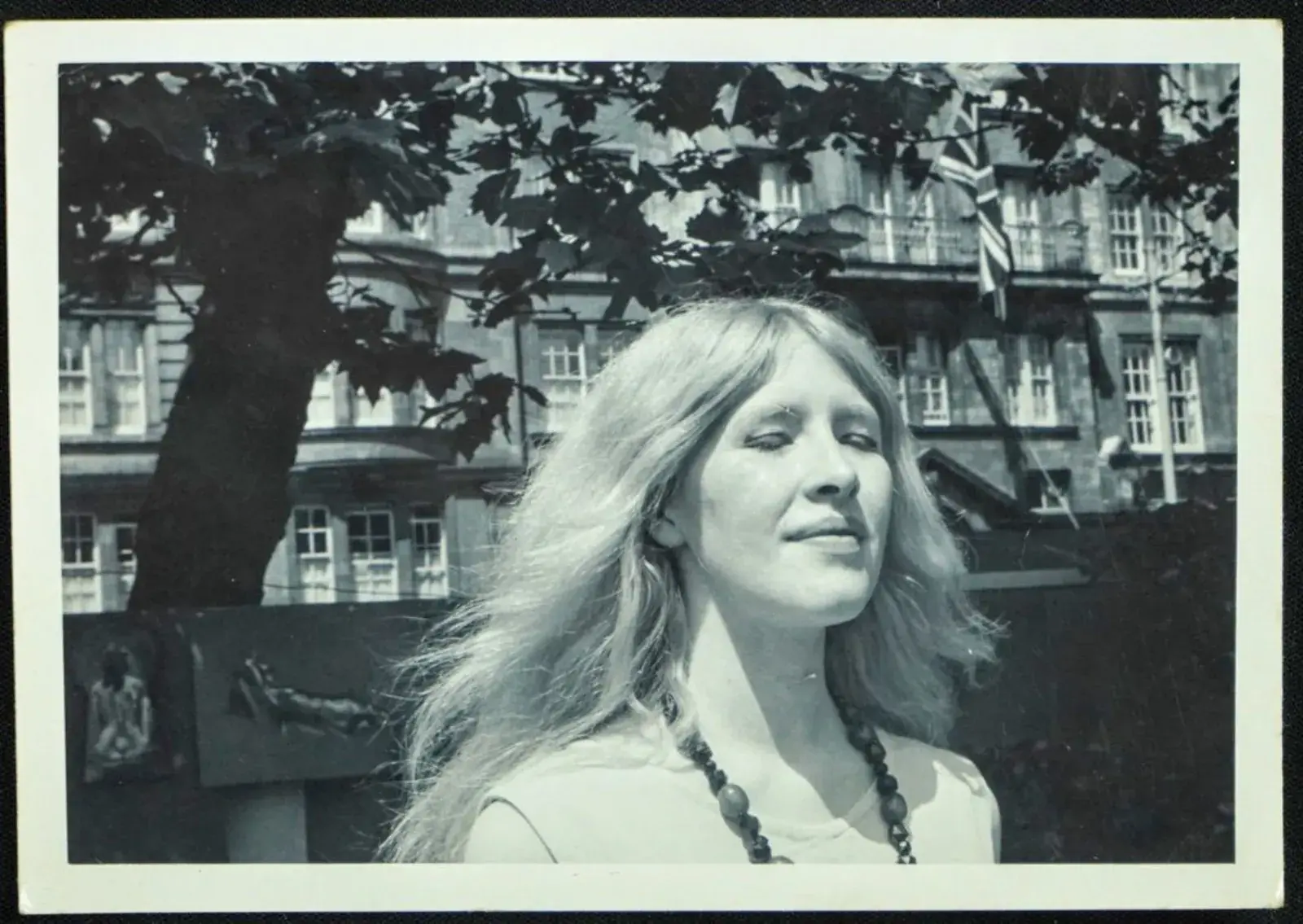
Her own account
A life in the Craft.
Maxine Sanders has spent more than sixty years inside the tradition she helped to found. This is her story, told as she has lived it, from a young woman in 1960s Manchester to the Witch Queen of Alexandrian Witchcraft.
Cheshire, and a Catholic childhood.
An ordinary English upbringing in the years after the war. The Craft did not run in the family. It came later, through Manchester's small occult community of the early 1960s, and through one man within it.
Maxine was born Arline Maxine Morris in Cheshire on 30 December 1946. Her upbringing was Roman Catholic. She was educated at St Joseph's Convent School in Manchester, an ordinary English childhood in the years just after the war. The Craft was not part of it.
She was eighteen and a student at Loreburn Secretarial College in Manchester when she first encountered the wider Pagan and occult community. It was a small world. The people in it knew each other, and Maxine's mother, who moved in some of the same esoteric circles, had become acquainted with one of its more conspicuous figures. Through that connection, in 1964, Maxine met him. A man with a fierce reputation and an even fiercer charm. Alex Sanders.
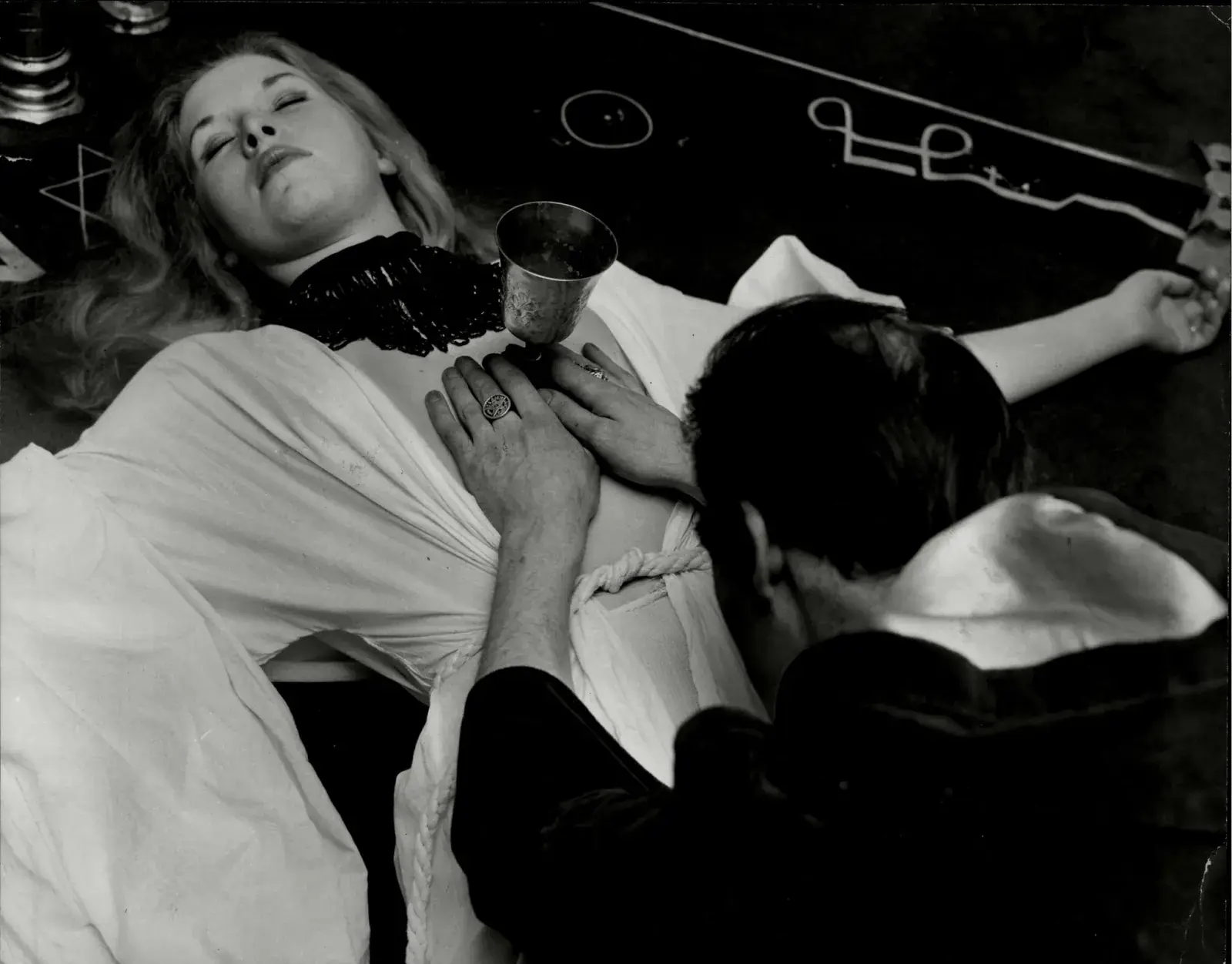
Alex, and the founding.
A meeting, a marriage, and the founding of the tradition that would carry both their names. The London years: coven, press, controversy, and the work of laying down a tradition that would outlast the noise.
By the late sixties Alex was the man the press called the King of the Witches. In 1964 he was emerging. He and Maxine began working together. Handfasted at Alderley Edge in 1965. Their daughter Maya born in 1967. Married at Beltane 1968 in a civil ceremony in Kensington. Their son Victor was born in 1972.
By the time the press had given Alex the title "King of the Witches," the tradition was already taking shape. What the newspapers reported as theatre, the inner circle was emerging as a modern Witchcraft practice. Initiations, training, lineage records: the unglamorous administrative bones of any tradition that intends to last.
We were laying down rails for a track we hoped people would run on for a long time. They have.
Maxine's role was not consort. From the outset she was co-founder, co-teacher, and Witch Queen in her own right.
The tradition got its name from a meeting. The journalist Stewart Farrar had spent long stretches with Alex while writing what would become his book, What Witches Do (1971). With the book about to go to press, he needed something to call the witches he had been recording. Among themselves they were just Alex's witches; the label Alexandrian had already begun to circulate within the coven as shorthand. At a meeting between Stewart, Alex and Maxine, the name was settled. It stuck. The name traces to Alex. Not, as has sometimes since been suggested, to the library of Alexandria.
The London years were photographed, filmed, written about, gossiped about. The actual work happened in the small, quiet rooms behind all of that, in coven meetings that no journalist attended.
I am part of a Mystery tradition. That is what I always was, and what I still am.
From an interview, 2018
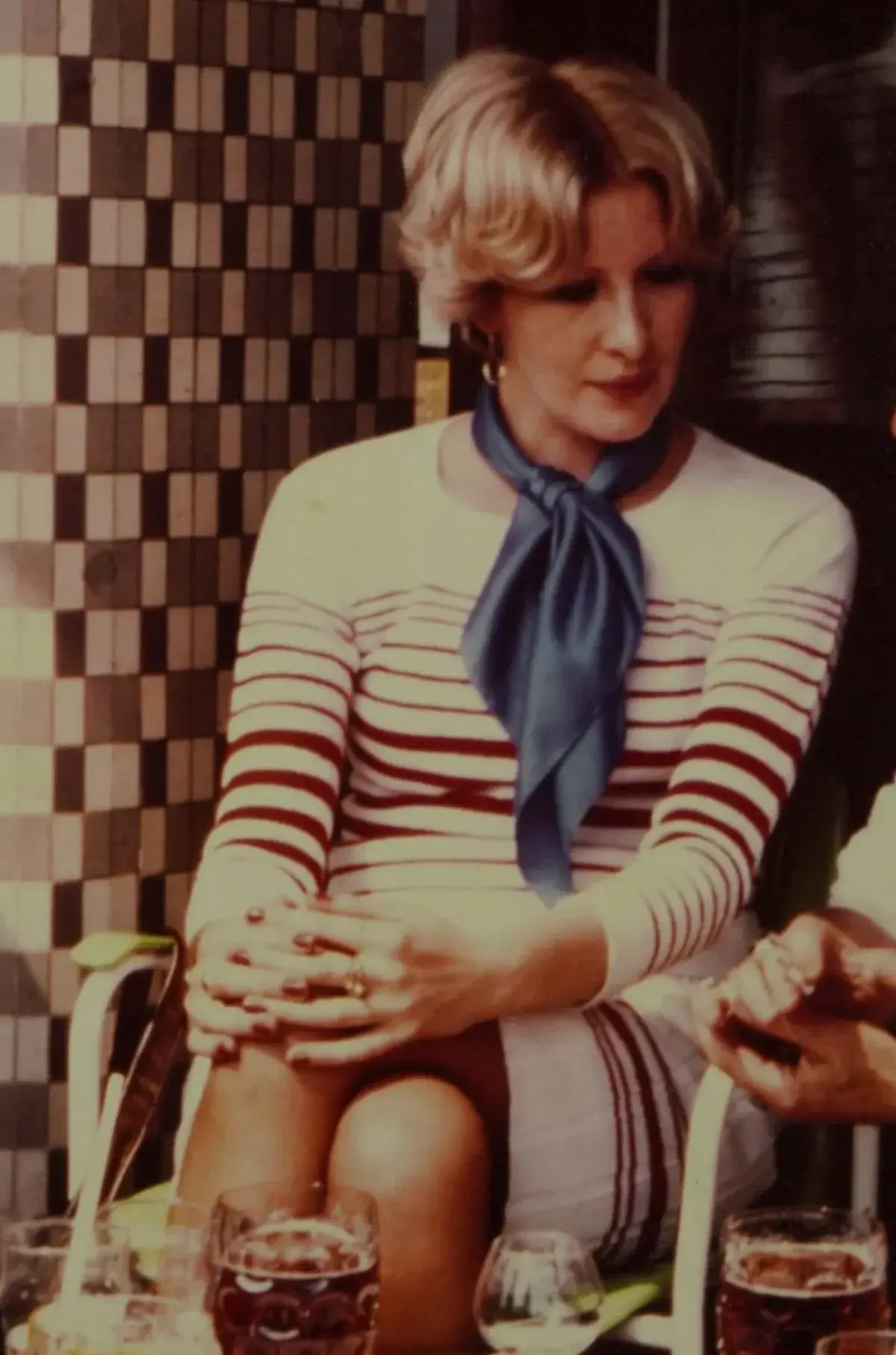
After Alex, the tradition.
Alex died in 1988. The tradition did not. Half a century of teaching, writing and initiation followed, carried by Maxine and the elders she trained.
The work after Alex's death was different in tone but not in substance. There were books to write, students to train, lineages to keep clean. Alexandrian Witchcraft was no longer a curiosity in the British press; it had spread through Europe, North America, South America, Australia, and was being practised by people who would never meet either founder in person.
Maxine's task in those decades was less about founding and more about tending. Holding the tradition open, correcting it where it drifted, defending it where it was misrepresented, and trusting the next generation with the ritual work itself.
The tradition is not mine to keep. It is mine to pass on accurately, and then to step out of the way.
Her two autobiographies, Maxine the Witch Queen (1976, ghostwritten) and Fire Child (2008), remain the standard reading on the early years of modern Witchcraft. She still teaches. She still writes. The diary on this site is the most recent voice in a long published record.
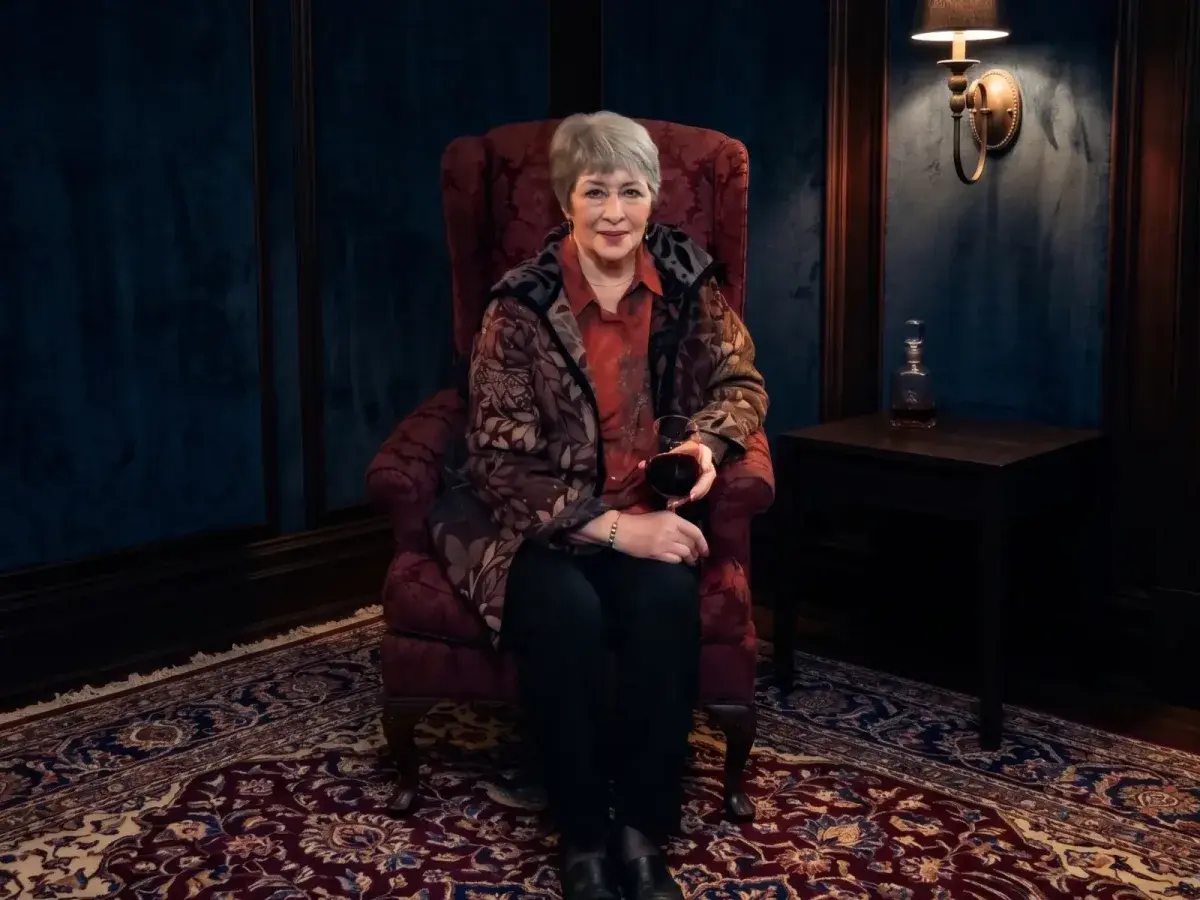
The Magic finds its own path.
An unexpected return to London. Quiet years of care, of counsel, of holding the work close. And then, as always, the Magic moved again.
Life took an unexpected turn in 2009 when Maxine's adult son became seriously ill, prompting her return to London to become his full-time carer.
Even during this deeply personal chapter, her magical practice continued, along with her guidance and eldership within working covens and the high priesthood. Her many years of counselling and supporting the bereaved also remained an important part of her work.
In 2014, circumstances shifted once again. The arrival of a student seeking guidance drew Maxine back into active coven work as a guiding elder.
As always, the Magic found its own path. Maxine soon found herself travelling once more to magical gatherings and Grand Sabbats.
That journey continues to this day.
The work continues.
Her current voice lives in the diary on this site. New essays arrive there as they are written.
Read the diary →